Chess Forks You Miss When You Expect a Check
Play four positions and learn what to check before trying a knight or pawn fork.

A chess fork is a move that lets one piece attack two or more targets at the same time. A knight can fork a king and rook with check. It can also fork two rooks without checking at all. To see the second kind, look for valuable targets first, then ask which square attacks both.
Finding the square is only half the calculation. Before you play the fork, check whether the opponent can capture your attacker, move a target with check, or save a piece by defending the other one. The four boards below show what those replies change. Chess.com’s reference on forks
Play the checking fork, quiet fork, and false fork
White moves first on every board. In the first three, try moving the same knight to the same square and compare what Black can do. In the fourth, look for a pawn move. The board shows prepared replies for the moves discussed here. You can also play another legal first move and explore it in an analysis board.
The board couldn’t load. You can use the diagrams and checked lines below.
Can the knight check and attack both rooks?
Select a piece and destination or drag to move. With a keyboard, use the arrows and Enter.
Checking fork · Nd6+
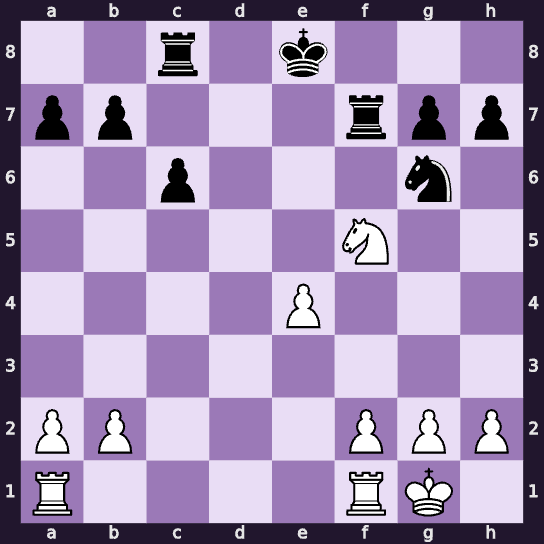
Start with the targets. The king on e8 and the rooks on c8 and f7 all sit a knight’s move away from d6. White’s knight on f5 can reach d6 immediately. Before playing it, see whether Black can capture on that square or has to move the king.
Check the knight fork with check
1.Nd6+ Ke7 2.Nxc8+ Kd7 is one checked line. The black king has to respond to the first check, and White takes the rook on c8 with another check. The knight is still on the board. Other king moves can alter which rook you’d take. Look at the new king square before deciding which capture to make.
1.Rad1 was also strong in our engine check. After 1…Rd8 2.Nd6+ Rxd6 3.Rxd6, White wins the exchange instead. If you found that sequence, compare the resulting material and position with the direct fork.
Position FEN2r1k3/pp3rpp/2p3n1/5N2/4P3/8/PP3PPP/R4RK1 w - - 0 1
Quiet fork · Nd6 attacks two rooks
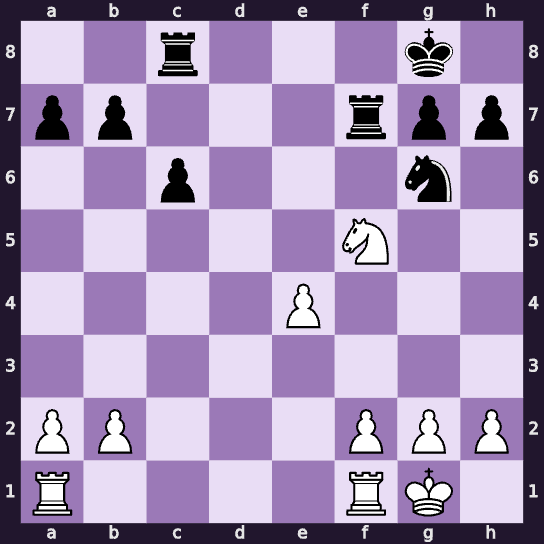
The rook targets stay where they were. Moving the king to g8 makes Nd6 a move without check. The threat is still immediate. Black can move either rook, so look for whether the move saves the other one as well, or allows the knight to trade itself for a rook.
Check the quiet knight fork
After 1.Nd6 Rd8 2.Nxf7 Kxf7, White has traded a knight for a rook. That material gain is called winning the exchange. The knight gets recaptured, and the fork has done its job. Against 1…Rcc7, the same 2.Nxf7 Kxf7 also wins the exchange. Black’s rook from c8 goes to c7, where it can guard the rook on f7, so work out the best recapture before assuming which piece will take the knight.
White also has a checking move, 1.Ne7+, which attacks the king and the c8 rook. Black can reply 1…Rxe7 with the f7 rook. Compare the two destinations. The quiet move survives, while the checking move puts the knight on a square the rook can take.
In this position, all 30 legal Black replies to Nd6 leave a legal knight capture of one of the rooks. That tells you where to stop searching for a hidden escape. You still need to see what takes your knight afterward. For example, after Rcc7, either the king or the rook can capture on f7. The material from that immediate exchange is the same, and the remaining pieces are placed differently.
Position FEN2r3k1/pp3rpp/2p3n1/5N2/4P3/8/PP3PPP/R4RK1 w - - 0 1
False fork · a pawn takes the attacker
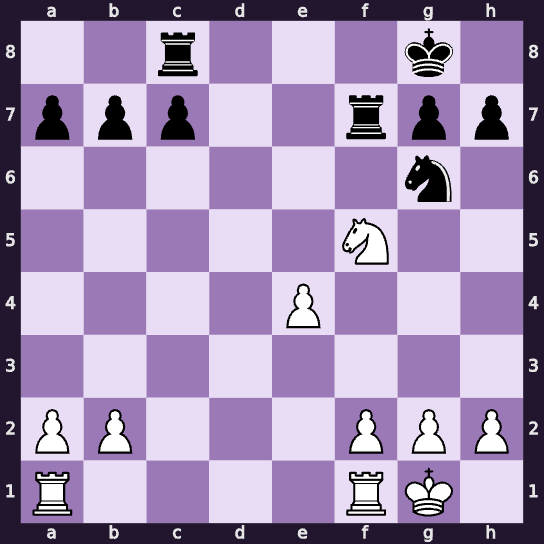
Now change the c-pawn from c6 to c7. The same knight move attacks the same two rooks. Check what the pawn can do from its new square before you try to collect either one.
Check why the fork fails
1.Nd6? cxd6 takes the knight. White cannot recapture the pawn on d6 immediately. 1.Rfd1 is a sound way to use the d-file with the knight still in place. One checked line is 1.Rfd1 Ne7 2.Ne3 c5. The rook move preserves White’s position while the knight looks for a safer square.
Position FEN2r3k1/ppp2rpp/6n1/5N2/4P3/8/PP3PPP/R4RK1 w - - 0 1
Pawn fork · d5 attacks a bishop and knight
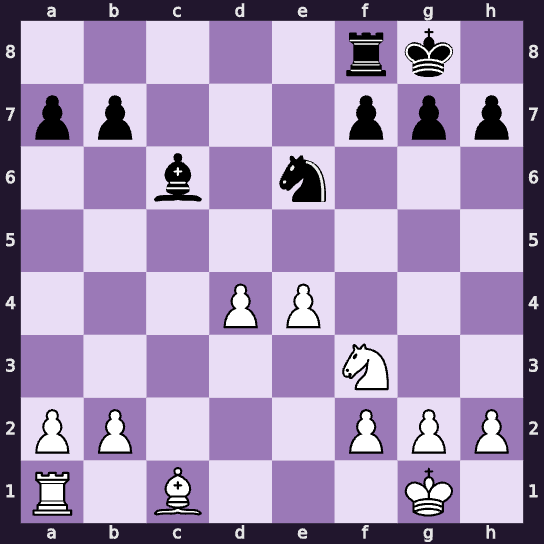
A pawn attacks diagonally even when it moves straight ahead. The white pawn on d4 can move to d5, where it aims at c6 and e6. Verify what the adjacent white pawn on e4 contributes before you play it.
Check the pawn fork
1.d5 Nd8 2.dxc6 Nxc6 trades the d-pawn for Black’s bishop. If Black plays 1…Bxd5 instead, 2.exd5 takes the bishop with the e-pawn. This is the contrast with the false knight fork. The attacker can be captured, and White has a favorable recapture ready.
Position FEN5rk1/pp3ppp/2b1n3/8/3PP3/5N2/PP3PPP/R1B3K1 w - - 0 1
These are four composed standard positions. The lines were checked for legality, and the first-move comparisons were checked with Stockfish 19 at depth 18. The board shows prepared lines. In Tera Chess, paste a FEN into Analysis board → Position & PGN and choose Load FEN to try other lines.
How to spot a fork in your own game
- Start with two targets. Notice an exposed king, two loose pieces, or a valuable piece that has few safe squares. For a knight, two targets on opposite-colored squares cannot both be attacked from the same square. Use that to eliminate pairs, then calculate.
- Find the square that attacks both. In the two-rook example, work backward from c8 and f7. The square d6 is a knight’s move from each. Check whether your knight can arrive there in one move and whether doing so leaves your own king safe.
- Check the opponent’s forcing replies. Can a pawn take the attacker? Can one target escape with check? Can a move defend both targets or force you to deal with mate? Calculate from the board you’ve created after the fork.
- Finish the capture and calculate the recapture. Count the material after the reply. Trading a knight for a rook or a pawn for a bishop can be enough. If the opponent wins something on the other side of the board, include it in the count.
For a bishop, rook, or queen, follow the rays from the fork square and include blockers. A rook might attack a queen along a file and a loose bishop along a rank. If another piece blocks one ray, that target still has cover. A pin has a different geometry. It restricts a piece on a line because moving it exposes something behind it. The fork examples here create two attacks from the same piece.
When the game is fast, use the last move to decide where to look. If the opponent moves a pawn away from a square, check what that pawn stopped attacking. In the matched boards above, a black c-pawn on c7 controls d6 and a pawn on c6 controls d5. The difference is a square you can point to before you calculate. A three-question check before you move
Check what your attacker was guarding
In a version of the quiet board, put White’s king on f1 and the rook that was on f1 on g1. Remove White’s f2-pawn. The black rook on f7 now has a line down the f-file to the king, with White’s knight on f5 in the way. The two rooks still sit a knight’s move from d6, but moving that knight would expose White’s king to check. If you see a promising attack, trace the square your piece is leaving as well as the one it reaches.
How to defend against a fork
Before the fork, identify the entry square. If moving either rook would remove the pair of targets in the quiet board, compare that with defending d6. When your king is one of the targets, ask whether the planned king move keeps your other piece safe after a knight check. Watch for a defender that is itself pinned and cannot capture.
After the fork, calculate the most forcing answer first. If you can take the attacker, check what recaptures. If you cannot take it, see whether one target can escape with check and buy time to save the other. Sometimes both targets cannot be saved. Preserve the more valuable one if you can, or force the fork to win the exchange instead of a whole rook. Play the next two moves in your head before settling on the least costly option.
Practise forks with and without a theme
Start with the four boards here. Later, try a mixed set that includes ordinary moves and other tactics. A fork label primes you to hunt for two targets. An unlabeled board lets you check whether you noticed the target pair before the prompt gave it away. Keep a separate note for retries of these boards and first attempts on new positions. Try the four-position blind test
Chess.com’s fork reference shows examples with several types of pieces. Lichess’s Fork practice has separate knight, pawn, rook, bishop, and queen examples. Use either for repetitions, then take one decision from a completed game. In Tera Chess’s public fork lesson, you can play through a checking fork and the reply. Signed-in analysis lets you load a finished standard game or a study FEN and test the defender’s alternative. Chess.com fork examples · Lichess Fork practice
When you miss a fork in a game, write down the two targets and the entry square. Add the best defense you found. If you saw both targets but your move lost to a pawn capture, keep the opponent’s capture in the exercise. That is the reply you need to remember when you encounter a similar board later. How to review a completed game
Work back one move from the fork
In the public Tera Chess example, Black played 14…h6. The fork 15.Nxc7+ hits the king on e8, queen on e6, and rook on a8. In the illustrated reply 15…Kd7 16.Nxe6 fxe6, White gives up the knight for the queen after taking the c7-pawn. Rewind and consider 14…O-O-O instead. The king goes to c8 and the rook leaves a8. Now 15.Nxc7 Kxc7 wins the knight for Black. Play both lines from the same starting position and make a note of which two pieces changed squares. Compare both moves on the review board
Common questions about forks in chess
Does a fork have to give check?
No. In the quiet example, the knight attacks both rooks and stays safe on d6. Black can make an ordinary move, yet White can still capture one of the rooks and win the exchange.
Can a pawn or king fork pieces?
Yes. A pawn can attack the two forward diagonals at the same time. A king can attack two pieces on neighboring squares when it can move there legally. With a king, check which squares the opponent controls before trying either capture.
Is a royal fork different?
A royal fork attacks the king and queen at the same time. Because the king is in check, the defender has to get out of check first. The defender may be able to capture the forking piece or, for certain checking pieces, block the line of check. Verify the reply before counting the queen.