Why You Solve Chess Puzzles but Miss Tactics in Games
Play four positions without a theme or hint. Then compare the details that make a tactic work in one game and fail in another.
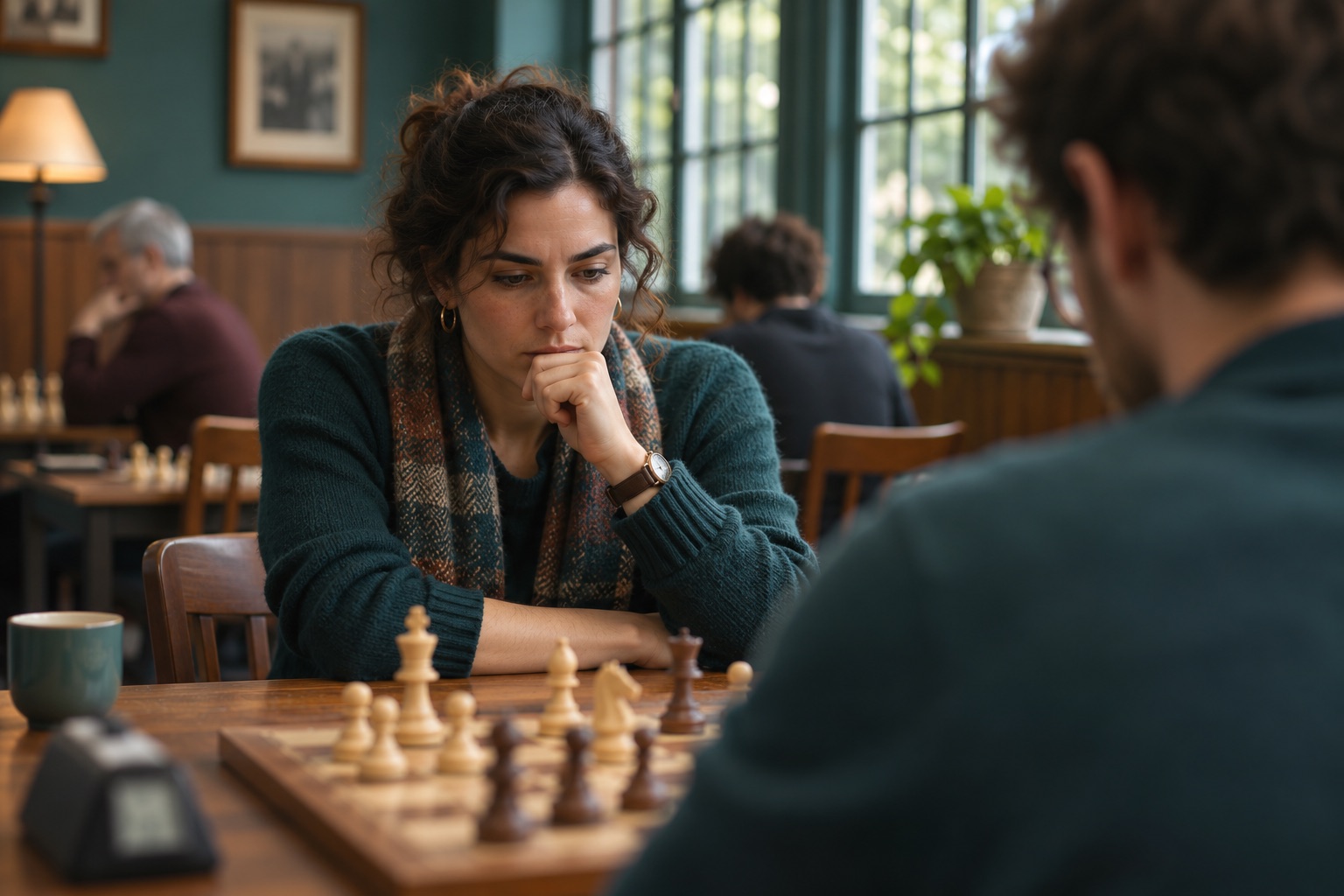
You can solve chess puzzles and still miss tactics in games because a puzzle tells you when to calculate. In a game you have to notice that a defender moved, a line opened, or a king ran out of safe squares. Once you see the cue, you still have to choose a move and check the opponent’s best reply.
Keep doing puzzles to learn patterns. Add positions where a tactic might work, might fail, or might simply trade pieces. Then review one decision from a finished game and ask what you saw before you knew the answer. The four boards below give you a place to start.
A blind test for spotting tactics
Play one White move in each position. Before moving, write what you expect Black to do and whether you think White can force a gain. Use 45–90 seconds per board if a time limit would help you focus. Keep the answers closed until you’ve made all four decisions. You can also use the diagrams and write your moves on paper.
The playable board couldn’t load. Open the diagrams to take the test on paper.
Choose a move in position 1
Select a piece and destination or drag to move. With a keyboard, use the arrows and Enter. The page keeps your first legal move on each board until you reload.
0 of 4 moves recorded.
See the four diagrams and copy a position
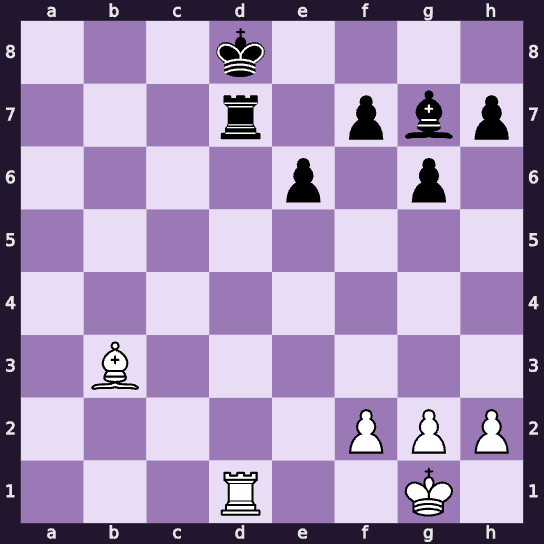
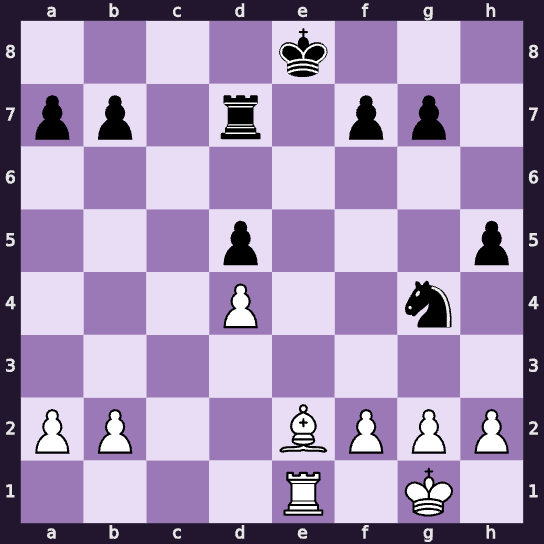
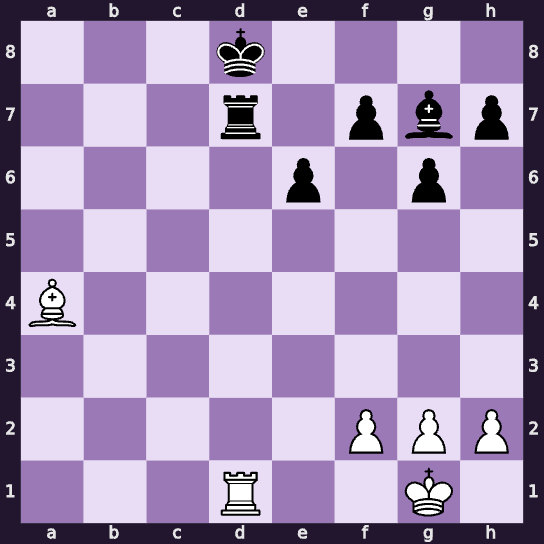
- 1
3k4/3r1pbp/4p1p1/8/8/1B6/5PPP/3R2K1 w - - 0 1- 2
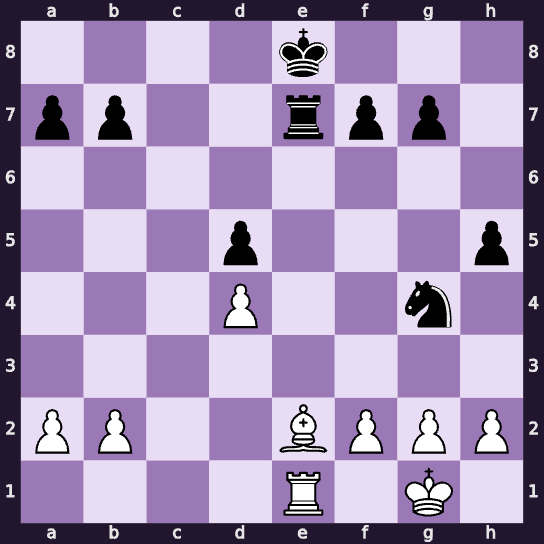
4k3/pp1r1pp1/8/3p3p/3P2n1/8/PP2BPPP/4R1K1 w - - 0 1- 3
3k4/3r1pbp/4p1p1/8/B7/8/5PPP/3R2K1 w - - 0 1- 4
4k3/pp2rpp1/8/3p3p/3P2n1/8/PP2BPPP/4R1K1 w - - 0 1
Reveal the four answers
Position 1 · The check trades rooks
1.Rxd7+ Kxd7 is a sound exchange. The bishop on b3 does not guard d7, and Black’s king can take the white rook. 1.h3 is also sound in the checked run. If you played the capture and expected the king to recapture, your calculation was good. If you expected to win a rook, mark the difference between your predicted reply and the legal one.
Position 2 · The capture uncovers a check
1.Bxg4+ wins the knight. When the bishop leaves e2, the rook on e1 checks the king along the open e-file. The h5-pawn can attack g4, but …hxg4 would leave Black’s king in check. One verified reply is 1…Re7 2.Rxe7+ Kxe7 3.Bxh5. Both rooks are gone, and White has gained a knight and a pawn. There are other strong first moves here. For example, 1.Bb5+ Kd8 2.Bxd7 Kxd7 wins the exchange. Give credit if you found and checked a sound alternative.
Position 3 · The same check wins a rook
1.Rxd7+ wins outright. The bishop on a4 guards d7 along a4–b5–c6–d7. Black’s king has to move instead of recapturing. 1.Bxd7 also wins because White’s rook protects the bishop on d7. The squares b5 and c6 matter just as much as the two pieces at the ends of that diagonal. After the test, imagine seeing the same board in a puzzle titled “Win a rook.” You could look for the capture immediately. In an unlabeled position, your first job is to see the defender.
Position 4 · The same capture allows mate
1.Bxg4 comes without check. Black’s rook on e7 blocks the white rook’s line to the king. Black can ignore the capture and play 1…Rxe1#. The white king’s own pawns close off f2, g2, and h2, and the rook controls f1 and h1. 1.f3 Nf6 is one sound alternative. The pawn attacks the knight while the bishop stays between the rooks. 1.h3 is also reasonable at the tested depth.
These are composed standard positions. All published moves were checked for legality. Stockfish 19 at depths 18–19 supported the tactical and balanced contrasts in the lines shown. Compare your choice and expected reply against the checked lines.
Why puzzle skill sometimes stays in the puzzle tab
In a themed puzzle, the theme heads your search. If you choose a page of discovered attacks, you’re already looking for a blocker that can move. A mixed puzzle takes away the theme but still promises a useful solution. During a game, the board decides what matters. A check may win a rook, exchange rooks, or leave your own king vulnerable. Positions 1 and 3 used the same first move and taught two different things.
Spotting and calculating fail at different points. If you never considered Bxg4+ in position 2, work on scanning the line behind your bishop. If you saw the capture and thought the h-pawn could recapture in check, work on legal replies. If you played Bxg4 in position 4 as though it were check, work on following the entire file through the enemy rook. These lead to different practice choices.
In a game you also have a clock and a plan already in motion. You might want to finish developing, trade a piece, or repeat a line you saw on the previous move. Give yourself a cue for when to reassess. When a piece changes squares, ask what it uncovered and what it stopped guarding. If the answer concerns a king or a valuable loose piece, spend more time there when your clock allows.
Try this scan in a game. Look at the square the last piece left. Trace one open line through that square. Then work out the strongest check or capture the opponent has after the move you want to play. If you cannot name a legal answer, spend your time on that branch or choose a different candidate. A three-question check before you move
A 15-minute routine for finding tactics in games
- Four minutes on one theme. Use one or two puzzles where you know the motif. For a discovered attack, name the front piece, the piece behind it, and the target. After solving, explain what forces the opponent to respond.
- Seven minutes on mixed positions. Take a few unmarked diagrams from completed games. Include ordinary moves and positions where a tempting tactic fails. Record one move and your predicted reply from each position, then check the answers. Let a sound trade count as a sound trade.
- Four minutes on one game decision. Open a finished game at a move you remember finding difficult. Open no evaluation until you have written what you expected. Then check two candidates and write one question to carry into your next game.
For position 4, a useful note would read “I took the knight because I thought the rook gave check. Black’s rook on e7 blocked the file and could take on e1 with mate. Before moving a blocker, trace the whole file and check the opponent’s rook capture.” You could use the two discovered-check boards above on different days to revisit that point.
When you redo one of these boards, measure whether you can explain the reply from memory. When you want to measure whether you look for the cue independently, use a fresh board without a theme or hint. A played game gives you an even better place to check whether you saw the cue with your clock running. A few review notes can tell you what to try next week.
If you choose the positions yourself, select them while replaying with evaluations off, before looking for tactical swings. Include decisions where you played a quiet move and the game continued normally. If a training partner sets the positions, ask for ordinary positions as well as tactics. When you see a picture from a game you remember clearly, keep it for review and use a less familiar one for the next first attempt.
Find the tactic you missed in a completed game
Open one finished game and find a move where the opponent’s reply surprised you. Rewind to the position before your move. Write the last move, what it now attacks, and whether it changed a file or diagonal. Keep the engine off until you can name a candidate for your side and a reply for theirs.
After you check the lines, use the first point where your original reasoning failed. If you missed the candidate, your practice question should name the board cue. If you saw the move and dismissed it because of an illegal defense, write down the defense and why it fails. If you noticed the idea and ran out of clock, check the game’s timestamps and decide whether you could have made a faster scan earlier. One mistake alone gives you a starting hypothesis.
- Before analysis
- What did their last move change? I considered ___ and expected ___.
- After checking
- The strongest reply I found was ___. It worked because ___.
- Next game
- When I see ___, I’ll look at ___ before moving.
To try a real review sequence, open the completed sample game and pause after 23…Qd8. White played 24.Nc6+, a discovered check that wins the queen after Black blocks with …f6. Trace the diagonal from White’s queen on b2 to the black king on h8. Once you see the open diagonal, try a different move by the same knight. 24.Nxg6+ Kg8 25.Qh8# is a checked mate in two. The position came from an illustrative game, and the change in result comes from a reply you can play through. Replay the finished game and try the position
Save the position if the cue can be tested again. Keep the first attempt and later retries in separate rows. When you have several completed games, compare whether the same decision keeps causing trouble before committing a week to it. How to analyze a finished game · Turn your Chess.com games into puzzles
Where Chess.com, Lichess, and Tera Chess fit
Chess.com offers themed practice where you can choose a motif and rating range. Use it for the part of the session where you want repetitions of the same pattern. Lichess lists a Healthy mix puzzle option and a way to browse puzzles from a player’s games. Use a mixed pool when you want to identify the motif yourself. Tera Chess lets you analyze completed Chess.com games and practise positions from them when analysis is available. Use the manual Analysis board when you want to bring in a specific position and test a candidate. For a session where you need quiet examples too, take a few positions from completed games before looking at their evaluations. Chess.com puzzle modes · Lichess puzzle themes · Compare the three review tools
Questions about puzzles and game performance
Does a higher puzzle rating mean I should win more games?
Puzzle ratings measure performance on the positions and scoring rules of a puzzle pool. Game ratings track results against other players in a time control. To see whether a particular skill is carrying over, look for that skill in your finished games. Check whether you spotted the tactic, calculated the defense, and had enough time to play it.
Should I solve puzzles faster?
Use some untimed positions to see where your calculation breaks down. If you already find the idea reliably without a clock, add a short, consistent limit and keep the first reply you wrote under that limit. When you review a game, check whether the missed move happened under similar time pressure. Speed on a familiar puzzle and the time you had in a game are two useful observations.
How do I know when to stop looking for a tactic?
Check the forcing candidates and look for what the previous move changed. If none of your candidates survives the best reply you can find, compare one or two ordinary moves that improve your position or answer a threat. Positions 1 and 4 reward seeing that distinction even though each contains forcing moves.